
ARV Explained: How After-Repair Value Estimates Actually Work
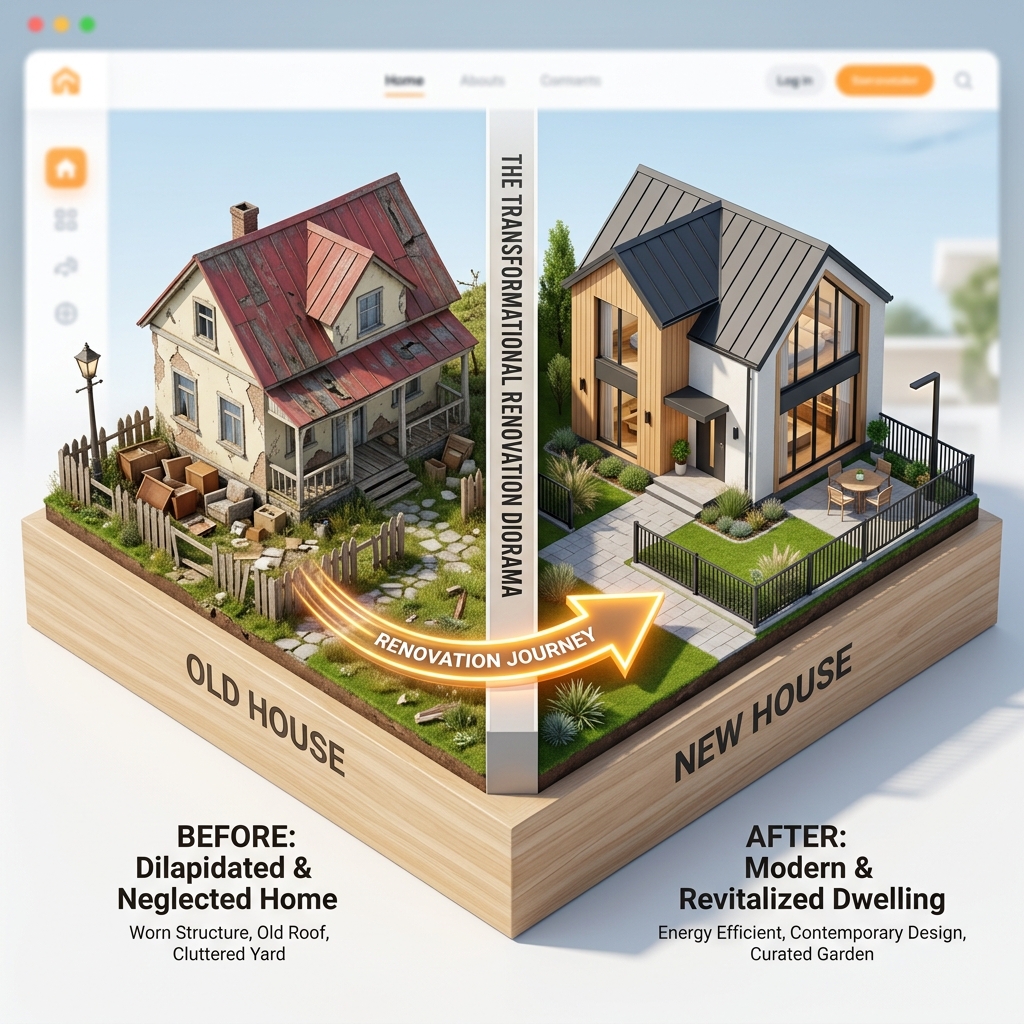
ARV — After-Repair Value — is the estimated market value of a property once any planned repairs or renovations are complete. It shows up constantly in flip underwriting (where it anchors the classic 70% rule) and just as often in rental analysis. For more data on this, see BiggerPockets.
The Bottom Line
Why ARV matters for a rental, not just a flip
Even if you are not planning to sell, ARV tells you how much equity a renovation could realistically create, and gives you a ceiling for how much a repair budget can reasonably grow before it stops making financial sense. For more data on this, see Fannie Mae.
How a traditional comp-average tool works
The conventional approach pulls a handful of recently sold, nearby, similar-sized properties (comps) and averages their sale prices. This works reasonably well in a market with plenty of recent, truly comparable sales — and struggles in a thin market. For more data on this, see NREI Online.
How Dwelize approaches it differently
Dwelize estimates ARV with an AI model that runs live web searches as part of generating the estimate, rather than averaging a fixed, pre-fetched comp set — and the report shows the sources the model drew on. For more data on this, see Mashvisor.
“A grounded, sourced ARV in the time it takes to type in an address — exactly when you need it.”
Like any estimate, it is a starting point for underwriting, not a substitute for a licensed appraisal or a local agent’s judgment before you commit capital. For more data on this, see Investopedia.
A Deeper Dive: Why This Matters Now More Than Ever
In today's rapidly evolving real estate market, standing still is the equivalent of falling behind. As institutional investors deploy billions of dollars into single-family rentals and multi-family syndications, the everyday independent investor must rely on sharper underwriting, tighter operational efficiencies, and a deeper understanding of macro-economic trends. It is no longer sufficient to simply look at a property and guess its potential; you must model it meticulously.
Consider the impact of shifting interest rates. When the cost of capital increases, the margin for error dramatically shrinks. A deal that would have easily cash-flowed at a 3% mortgage rate might bleed money at 7%. This forces investors to seek out higher-yielding properties, often moving from Class A and B neighborhoods into Class C, or executing heavy value-add strategies to force equity creation.
“The most successful investors don't predict the future; they underwrite so conservatively that they survive regardless of what the future holds.”
Common Mistakes and Pitfalls
One of the most frequent errors we observe is "spreadsheet bias"—the tendency to torture the numbers until they tell you what you want to hear. If a deal requires a 0% vacancy rate and zero maintenance costs to break even, it is not a deal; it is a liability waiting to happen.
- Underestimating Capital Expenditures (CapEx): Roofs, HVAC systems, and foundations do not last forever. Failing to reserve cash for these massive expenses is a recipe for disaster.
- Ignoring Local Legislation: Rent control laws, eviction moratoriums, and strict zoning ordinances can completely alter the profitability of a strategy.
- Over-Leveraging: Taking on too much debt leaves you incredibly vulnerable to market downturns and extended vacancy periods.
Operational Reality Check
Actionable Steps to Implement Today
Knowledge without execution is merely entertainment. To truly benefit from this strategy, you must begin implementing these principles immediately. Start by analyzing your current portfolio or, if you are new, by underwriting at least three mock deals per day. This builds the "muscle memory" required to spot a genuinely good opportunity the moment it hits the market.
Furthermore, focus on building your team. Real estate is a team sport. You need a rock-solid contractor, a savvy real estate agent who understands investor needs, and a property manager who treats your assets like their own. Without this triad, scaling becomes nearly impossible and infinitely more stressful.
Conclusion and Next Steps
Ultimately, success in real estate investing comes down to a combination of education, disciplined underwriting, and relentless execution. The concepts outlined here are foundational—they are the bedrock upon which massive, generational wealth is built.
We highly recommend using tools like Dwelize to accelerate your analysis. By instantly calculating ARV, cap rates, and cash-on-cash returns, you remove the emotional bias from your acquisitions and rely purely on the data. Keep underwriting, stay disciplined, and your portfolio will grow.